
Light Your Property After Sundown
Landscape lighting installation for residential and commercial properties that need visibility and safety.
When pathways, entryways, and outdoor features disappear after dark, you lose both safety and function. Landscape lighting makes walkways visible, highlights architectural details, and keeps steps and curbs clearly marked when guests or employees arrive after sunset. The right placement prevents tripping hazards and adds usable hours to outdoor spaces.
American Dream Landscape & Property Management installs landscape lighting for both residential and commercial customers. This includes path lights, spotlights for trees or signage, step lights, and wall-mounted fixtures. The system runs on low-voltage wiring buried along planting beds and hardscape edges, controlled by timers or photocells that turn lights on at dusk and off at dawn.
If your property needs better visibility at night or you want to highlight specific features, contact us to plan a lighting layout that addresses those needs.
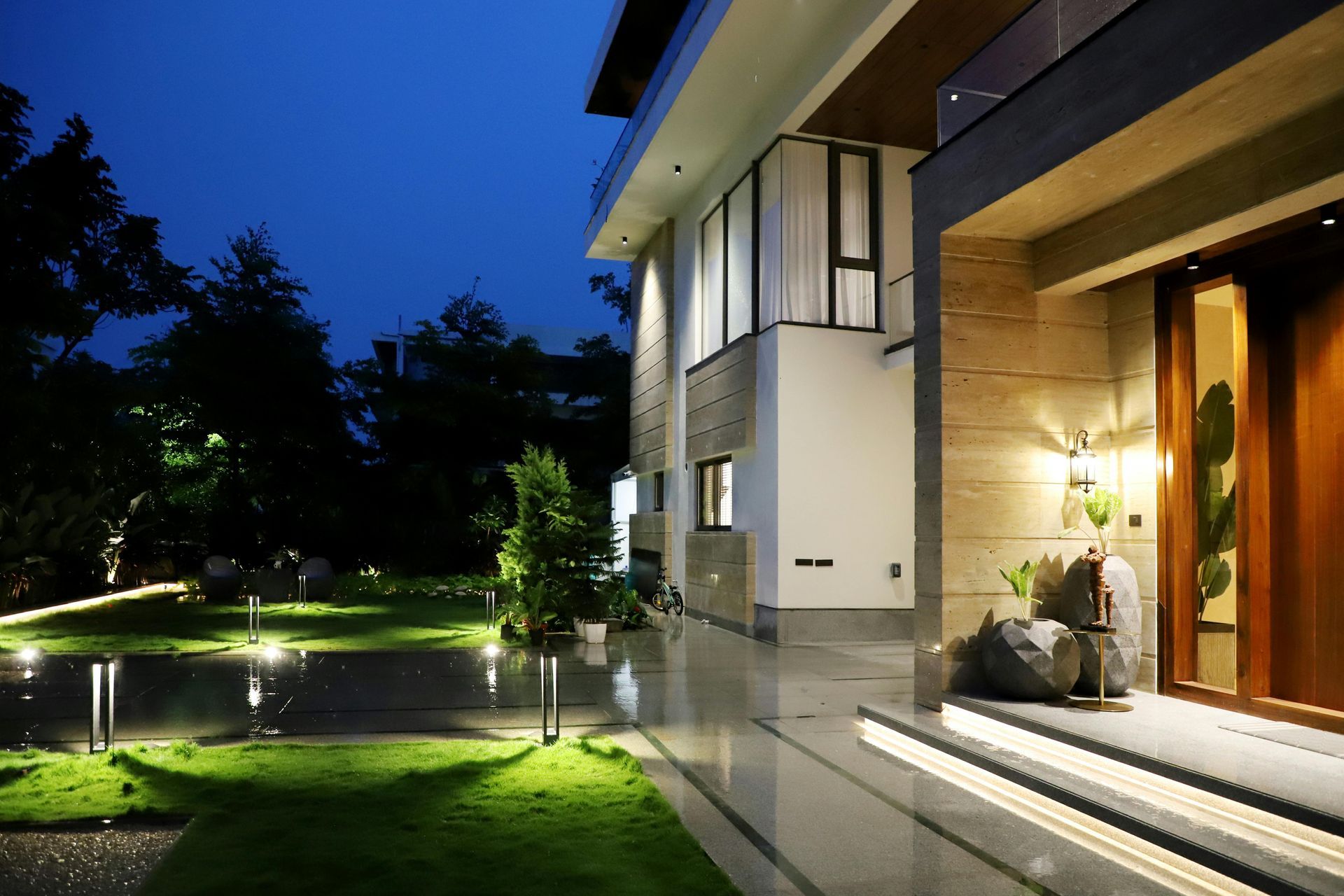
How Fixtures Are Placed and Wired
Installation begins with mapping fixture locations based on where light is needed most, such as along steps, near doorways, or around focal plants and signage. Low-voltage cable is buried in shallow trenches alongside beds or under mulch, connecting each fixture back to a transformer mounted near an exterior outlet. Fixtures are staked or mounted depending on their purpose, and bulbs are aimed to reduce glare while providing adequate coverage.
Once the system is active, you will see pathways and steps clearly outlined at night, with trees or architectural elements lit from below or the side. Entryways become more welcoming, and dark corners that previously felt unsafe are now visible and functional after hours.
The system uses LED bulbs for longevity and lower energy use. Transformers are sized to match the total wattage of connected fixtures, and timers can be adjusted seasonally as daylight hours change. The installation does not include lighting for large tree canopies that require lift access or electrical work beyond low-voltage systems.
Common Questions About Lighting Installation
Homeowners and property managers often ask about power requirements, bulb replacement, and whether the system can be expanded after the initial installation.
What voltage do landscape lighting systems use?
Most systems run on low-voltage power, typically twelve volts, supplied by a transformer plugged into a standard outdoor outlet. This reduces shock risk and allows safer DIY bulb replacement when needed.
How long do the bulbs last?
LED bulbs used in landscape lighting typically last between twenty-five thousand and fifty thousand hours, depending on usage. That translates to several years of nightly operation before replacement is needed.
What controls when the lights turn on and off?
Most systems use a timer or photocell attached to the transformer. Photocells activate the lights automatically at dusk and turn them off at dawn, while timers let you set specific on and off times.
Can I add more fixtures later?
Yes, as long as the transformer has enough capacity to handle additional wattage. The wiring can be extended, and new fixtures can be spliced into the existing cable runs without redoing the entire system.
Why do some fixtures aim upward and others downward?
Upward-facing fixtures highlight trees, walls, or architectural details by casting light from below. Downward-facing fixtures illuminate pathways, steps, and ground-level areas to improve safety and visibility.
American Dream Landscape & Property Management installs lighting systems for both residential and commercial clients who need reliable visibility and safety after dark. If you are ready to add lighting to your property or expand an existing system, reach out to discuss fixture placement and system design.